

There’s something incredibly satisfying about pulling a fresh loaf of focaccia out of the oven. The crispy golden edges, airy interior, fragrant rosemary, and pools of olive oil make it taste like it came straight from an artisan bakery.
And it’s surprisingly easy to make at home.
This beginner-friendly focaccia bread recipe uses simple pantry ingredients and requires no stand mixer. Whether you’re serving it with pasta, dipping it into olive oil, or using it for sandwiches, this homemade bread is one you’ll come back to again and again.
Why You’ll Love This Recipe
Homemade focaccia bread might sound intimidating, but this focaccia is one of the easiest loaves you can make. The dough is simple to work with, and most of the time is hands-off while it rises, making it perfect even if you’re new to baking.
What I love most is how effortlessly impressive it feels. With its crispy golden crust, soft and airy center, fragrant rosemary, and generous drizzle of olive oil, it tastes like something you’d pick up from your favorite artisan bakery.
Whether you’re serving it alongside a cozy bowl of soup, dipping it into olive oil and balsamic vinegar, or using it to make the most delicious sandwiches, this focaccia bread always disappears fast.
Ingredients You’ll Need
The beauty of this homemade focaccia bread is that it doesn’t require a long list of ingredients, just a few pantry staples that come together to create something truly delicious. Bread flour is the key to achieving that soft, chewy texture, while instant yeast helps the dough rise into a light and airy loaf. Warm water brings everything together, and a generous amount of extra virgin olive oil gives focaccia its rich flavor, tender crumb, and irresistibly crispy golden crust.
To finish, you’ll need fine sea salt in the dough and a sprinkle of flaky sea salt on top for extra crunch and flavor. Fresh rosemary is the classic choice, adding an aromatic touch that pairs perfectly with the olive oil. If you’d like to customize your focaccia bread, toppings like cherry tomatoes, sliced garlic, Kalamata olives, caramelized onions, or vegetarian-friendly Parmesan make wonderful additions without taking away from its simple, rustic charm.
How to Make Homemade Focaccia Bread
Start by combining the warm water, instant yeast, and a drizzle of olive oil in a large mixing bowl. Once the yeast has had a few minutes to activate, add the bread flour and salt, then mix until a sticky, shaggy dough forms. Don’t be tempted to add too much extra flour, a slightly wet dough is what gives focaccia bread its signature light and airy texture.
Cover the bowl and let the dough rise in a warm place until it has doubled in size. Once risen, transfer it to a generously oiled baking pan and gently stretch it toward the edges. If the dough resists, let it rest for a few minutes before stretching again. Cover and let it rise a second time until it becomes puffy and pillowy.
When you’re ready to bake, drizzle the dough generously with extra virgin olive oil and use your fingertips to press deep dimples all over the surface. Sprinkle with fresh rosemary and flaky sea salt, then bake until the top is beautifully golden and the edges are crisp.
Let the focaccia bread cool for about 10 minutes before slicing. It’s best enjoyed warm, whether you’re dipping it in olive oil and balsamic vinegar, serving it alongside soup or pasta, or using it to make delicious homemade sandwiches.
Tips for the Best Homemade Focaccia Bread
Making great focaccia is all about letting the dough do the work. These simple tips will help you get a bakery-style loaf every time.
- Don’t add too much flour. The dough should feel sticky, that’s what creates the soft, airy texture focaccia is known for.
- Use good-quality olive oil. Since it’s a key ingredient, a flavorful extra virgin olive oil makes a noticeable difference.
- Be patient with the rises. Giving the dough enough time to rise is what creates those beautiful air pockets.
- Don’t be shy with the dimples. Press your fingertips firmly into the dough before baking. Those little pockets hold the olive oil and give focaccia its signature look.
- Bake until deeply golden. A rich golden-brown crust means a crisp exterior while the inside stays light and fluffy.
- Let it cool slightly before slicing. Waiting 10 minutes helps the bread set while still keeping it warm and soft.
Variations to Try
One of the best things about focaccia is how easy it is to customize. Once you’ve mastered the basic recipe, you can switch up the toppings to suit your taste or whatever you have on hand.
- Garlic & Herb: Top with thinly sliced garlic, fresh thyme, and rosemary for a classic flavor combination.
- Cherry Tomato & Basil: Press halved cherry tomatoes into the dough before baking and finish with fresh basil after it comes out of the oven.
- Olive Focaccia: Scatter sliced Kalamata or green olives over the top for a savory Mediterranean twist.
- Caramelized Onion: Sweet, caramelized onions add incredible flavor and pair beautifully with rosemary.
- Vegetarian Parmesan: Sprinkle grated vegetarian-friendly Parmesan over the dough before baking for an extra cheesy, crispy crust.
- Everything Bagel: Swap the rosemary for everything bagel seasoning to give your focaccia a fun and flavorful twist.
No matter which variation you choose, don’t forget the generous drizzle of extra virgin olive oil, it’s what gives focaccia its signature golden crust and rich flavor.
Storage & Reheating
If you have leftovers (which isn’t always the case!), focaccia stores surprisingly well and tastes just as delicious the next day.
Store it in an airtight container or wrap it tightly at room temperature for up to 2 days. For longer storage, refrigerate it for up to 5 days, though the texture is best when enjoyed fresh.
To freeze, let the focaccia cool completely, then wrap individual slices or the whole loaf tightly in plastic wrap and place it in a freezer-safe bag. It will keep well for up to 3 months.
When you’re ready to enjoy it again, reheat it in a 350°F (175°C) oven for 5-10 minutes until warmed through and slightly crisp. You can also toast individual slices for a quick snack or sandwich. I recommend avoiding the microwave if possible, as it can make the bread soft and chewy instead of crisp around the edges.
Frequently Asked Questions
Can I use all-purpose flour instead of bread flour?
Yes! Bread flour gives focaccia a slightly chewier texture and larger air pockets, but all-purpose flour works well if that’s what you have on hand. The bread will still be soft, fluffy, and delicious.
Why is my focaccia dough so sticky?
That’s completely normal. Focaccia dough is much wetter than traditional bread dough, and that extra moisture is what creates its light, airy crumb. Resist the urge to add too much flour.
Can I make the dough ahead of time?
Absolutely. After mixing the dough, cover it and refrigerate it overnight. The slow rise develops even more flavor, making the focaccia taste even better. Let the dough sit at room temperature for about 30 minutes before shaping and baking.
How do I know when the focaccia is done?
The top should be a deep golden brown, and the edges should feel crisp. If you’re unsure, gently lift a corner, the bottom should also be nicely browned.
Can I freeze homemade focaccia?
Yes. Let the bread cool completely, then wrap it tightly and freeze for up to 3 months. Reheat it in the oven for the best texture.
What can I serve with focaccia?
Focaccia pairs beautifully with soups, pasta dishes, fresh salads, olive oil and balsamic vinegar, or a simple charcuterie board. It also makes excellent sandwich bread.
Final Thoughts
This homemade focaccia is one of those recipes that’s simple to make but always feels special. With its crispy golden crust, soft, airy center, and fragrant rosemary, it’s perfect for everything from weeknight dinners to weekend gatherings.
Serve it alongside my Easy Creamy Ricotta Pasta Recipe (30 Min. Vegetarian recipe) or enjoy it with my Best Homemade Margherita Pizza Without a Pizza Oven for a delicious homemade meal. And if you’re craving something sweet afterward, my Easy Eggless Brownie Recipe (Fudgy Vegetarian Brownies) or Easy Eggless Brownie Recipe (Fudgy Vegetarian Brownies) make the perfect finishing touch.
If you try this recipe, I’d love to hear how it turned out. Happy baking!
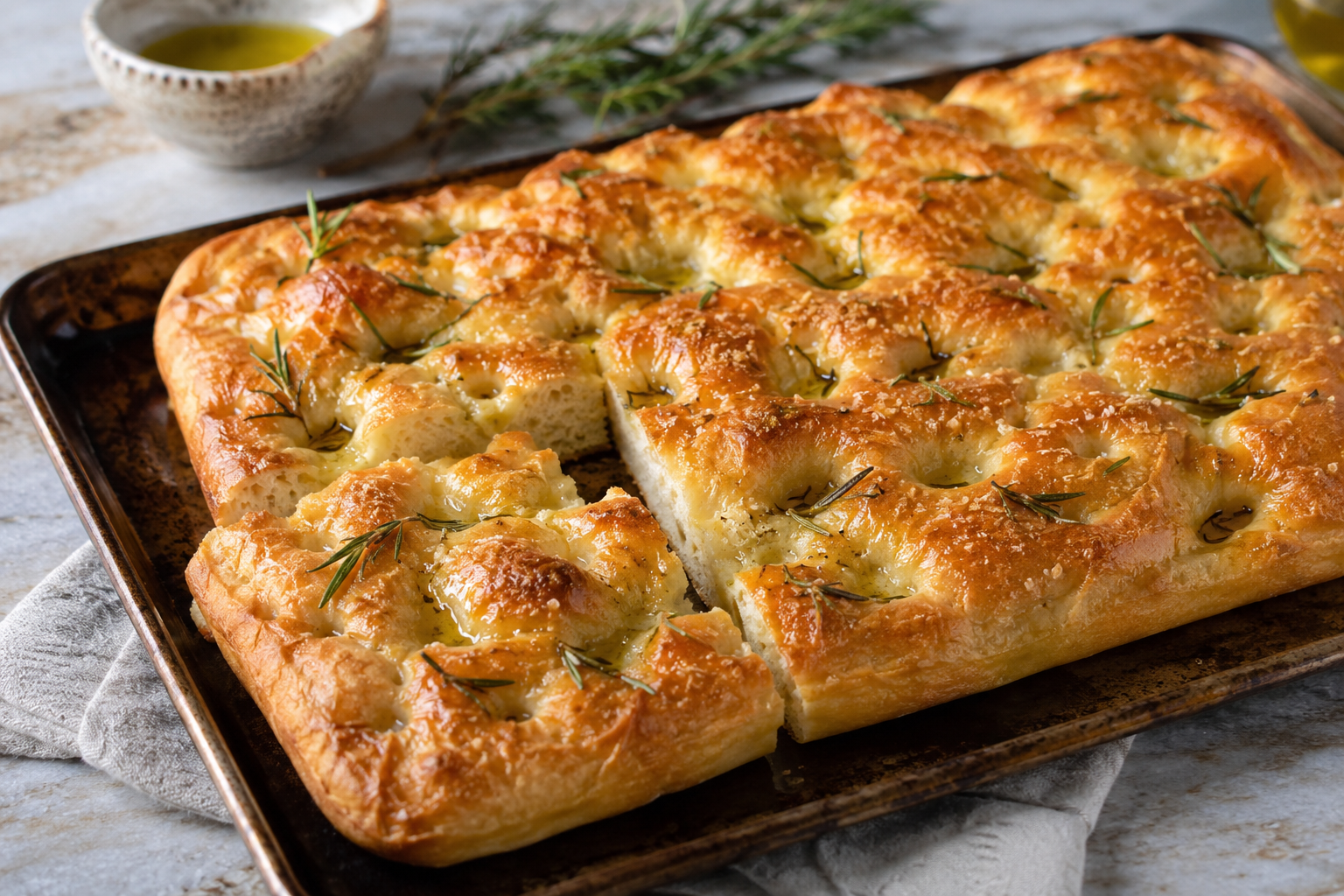
Easy Homemade Focaccia Bread (Bakery-Style, No Stand Mixer)
Ingredients
Method
- In a large bowl, combine the warm water, instant yeast, and olive oil. Let it sit for about 5 minutes until slightly foamy.
- Add the bread flour and salt, then stir until a sticky dough forms. Avoid adding extra flour, the dough should be soft and slightly wet.
- Cover the bowl and let the dough rise for 1-2 hours, or until doubled in size.
- Generously oil a baking pan. Transfer the dough to the pan and gently stretch it toward the edges. If it resists, let it rest for 10 minutes before stretching again.
- Cover and let the dough rise for another 30-45 minutes until puffy.
- Preheat your oven to 425°F (220°C). Drizzle the dough with olive oil, then press deep dimples all over the surface with your fingertips. Sprinkle with rosemary and flaky sea salt.
- Bake for 20-25 minutes, or until the focaccia is deeply golden with crisp edges.
- Let cool for about 10 minutes before slicing and serving.
Notes
- The dough should be sticky, this creates the airy texture.
- Use good-quality extra virgin olive oil for the best flavor.
- Fresh rosemary gives the most authentic taste.
- Store at room temperature for up to 2 days, refrigerate for 5 days, or freeze for 3 months.
